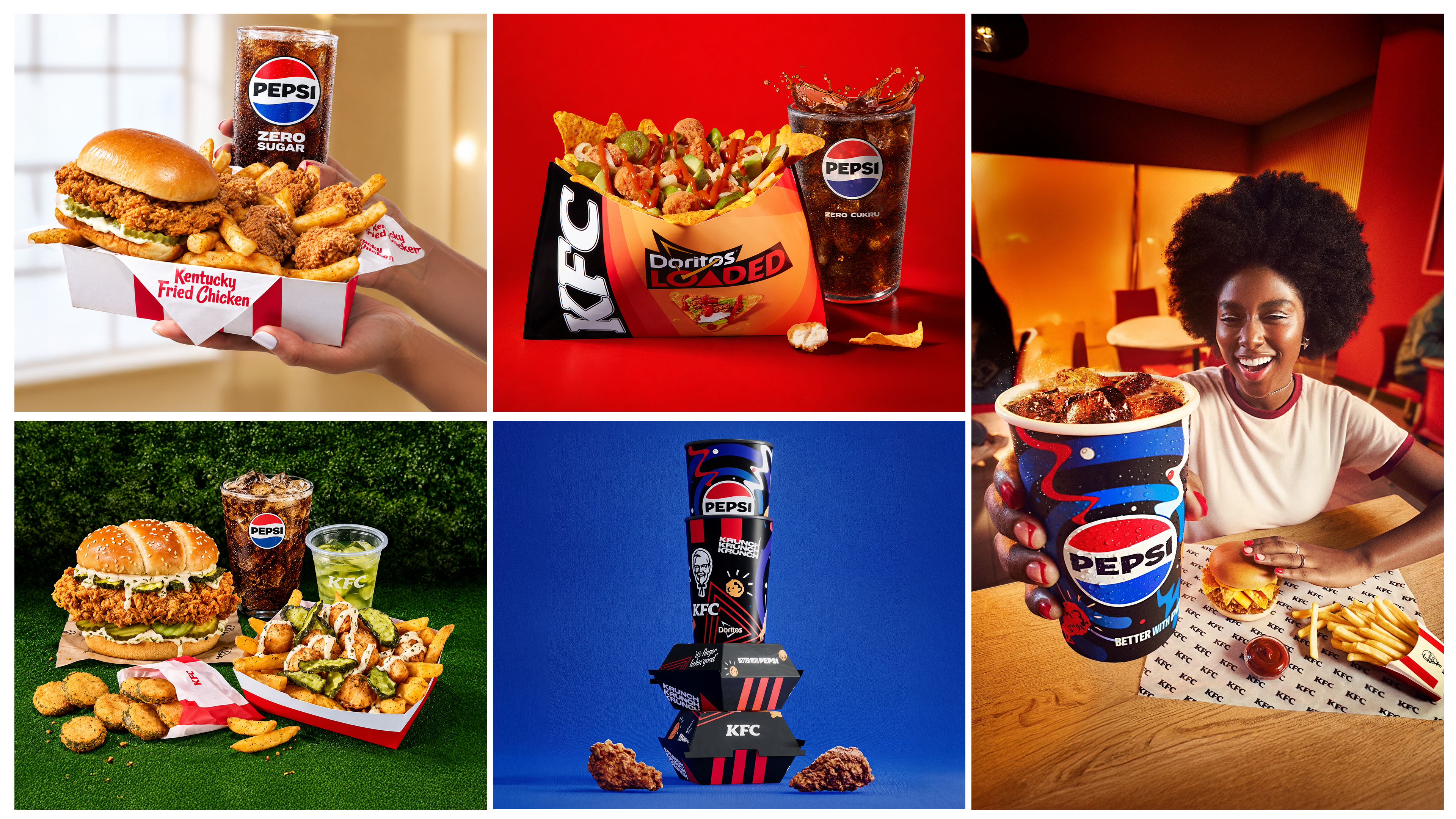
KFC has reconfirmed PepsiCo as its beverage partner of choice across eight international markets — Australia, India, the UK, Spain, Germany, France, the Netherlands, and Belgium — extending a collaboration that spans multiple decades and now stretches into culinary territory as well as the fountain.
The renewal cements PepsiCo's position as the preferred pouring supplier across a significant slice of KFC's international estate, which already carries PepsiCo brands throughout the Middle East, Europe, Asia-Pacific, and Latin America. For foodservice operators and equipment specifiers, the deal has practical back-of-house implications: KFC locations in these markets will continue to invest in PepsiCo-compatible beverage dispensing infrastructure, from fountain equipment to cold-drink merchandising, as the chain actively works to modernize and expand its beverage program.
Beverage Strategy Targets Gen Z
KFC's stated ambition is to broaden its drinks menu to capture evolving consumer preferences, with Gen Z specifically called out as a growth segment. The renewed partnership positions PepsiCo to supply brands across crafted, functional, and energy beverage categories alongside established fountain staples — Pepsi Zero Sugar, Pepsi MAX, Pepsi MAX Cherry, Lipton Peach Iced Tea, and 7UP. For operators spec'ing or upgrading beverage equipment in KFC builds and remodels, the continuation of a single-supplier pouring arrangement simplifies dispenser selection and service agreements. It also signals that multi-valve fountain and cold-beverage equipment capable of handling an expanding SKU count will remain central to KFC's international kitchen design going forward. Consultants planning KFC international buildouts should anticipate a beverage footprint that accommodates portfolio growth rather than a static drink menu.
Culinary Co-Development Adds BOH Complexity
Beyond the fountain, the partnership now explicitly extends into culinary innovation — a dimension that carries its own equipment implications. The flagship example is Doritos Loaded, a menu item combining KFC's crispy chicken tenders with Doritos corn tortilla chips and Mexican-inspired toppings, available in select markets. Cross-brand culinary items like this typically require additional prep steps, holding solutions, and potentially dedicated assembly stations in the back of house. As KFC scales flavor-forward, ingredient-layered items across international kitchens, operators and their equipment consultants will need to evaluate whether existing prep and cold chain and storage infrastructure can support expanded ingredient sets — or whether new smallwares, holding equipment, or refrigerated prep tables are warranted.
Eugene Willemsen, CEO of International Beverages at PepsiCo, framed the renewal in terms of cultural velocity: "PepsiCo is moving at the speed of culture, bringing new capabilities and category-leading innovation, to help KFC build a more modern, distinctive, and relevant beverage business around the world."
The broader trend here tracks with what foodservice equipment dealers and operators are seeing across the quick-service segment globally: beverage programs are no longer an afterthought bolted onto the back of the fryer lineup. They are becoming a primary traffic driver, requiring dedicated equipment investment, expanded cold storage, and tighter integration with kitchen flow design. PepsiCo's expanded culinary role at KFC reinforces that the beverage supplier relationship now reaches well past the syrup room and into the heart of kitchen planning.
Written by Michael Politz, Author of Guide to Restaurant Success: The Proven Process for Starting Any Restaurant Business From Scratch to Success (ISBN: 978-1-119-66896-1), Founder of Food & Beverage Magazine, the leading online magazine and resource in the industry. Designer of the Bluetooth logo and recognized in Entrepreneur Magazine's "Top 40 Under 40" for founding American Wholesale Floral, Politz is also the Co-founder of the Proof Awards and the CPG Awards and a partner in numerous consumer brands across the food and beverage sector.
Frequently Asked Questions
Which eight markets are covered under this renewed PepsiCo-KFC beverage deal?
Australia, India, the UK, Spain, Germany, France, the Netherlands, and Belgium. This renewal extends PepsiCo's existing presence across the Middle East, Europe, Asia-Pacific, and Latin America, making it KFC's dominant pouring supplier internationally.
What beverage brands will PepsiCo supply to KFC under this agreement?
The portfolio includes Pepsi Zero Sugar, Pepsi MAX, Pepsi MAX Cherry, Lipton Peach Iced Tea, and 7UP, plus new crafted, functional, and energy beverage categories designed to capture Gen Z consumers. This expanded SKU count directly impacts fountain equipment specifications for new builds and remodels.
How does a single-supplier beverage arrangement affect equipment spec decisions for KFC operators?
Single-supplier deals simplify dispenser selection, reduce service complexity, and lock in standardized pouring infrastructure across locations. Multi-valve fountain and cold-beverage equipment capable of handling expanded portfolios becomes the operational standard for all KFC international projects.
Why is Gen Z specifically important to KFC's beverage strategy under this deal?
KFC is explicitly targeting Gen Z as a growth segment by expanding beyond traditional fountain drinks into functional and energy categories. This demographic shift drives demand for modernized beverage dispensing infrastructure that can rotate premium and innovative SKUs faster than legacy equipment.
What practical back-of-house changes should operators expect in these eight markets?
KFC locations will continue investing in PepsiCo-compatible dispensing infrastructure, fountain equipment, and cold-drink merchandising as the chain modernizes its beverage program. Consultants planning international buildouts should budget for multi-valve systems and expanded cold-case footprints to accommodate the growing portfolio.